Search This Blog

Thursday, January 31, 2013

Disabled from Life? Armenia and Its Disabled People

Armenia is a small country in the South Caucasus with a population of nearly 3 million people. Having gained independence, after the collapse of the Soviet Union in 1991, Armenia has been trying to overcome the legacy of the Soviet past, a goal which was quite hard to accomplish. The difficulties that Armenia had to face were in every area of activities, especially in Human Rights, which was unknown or ignored topic in the Soviet Union. 

Due to very intensive domestic political developments, which were taking place on a regular basis, the main focus of Civil Society and NGOs in the area of human rights in Armenia were mainly freedom of speech and freedom expression.Thus, not enough attention has been paid to other aspects of human rights including the problems of disabled people. In my opinion this problem is crucial. Just like in every other country, in Armenia too, there are people who have suffered incurable physical injuries or were born with them.  These people need more care and attention. They feel isolated and sometimes even don't come out from houses.
There are mainly two reasons for that. 

                       Two disabled women collecting signatures for adapting roads for the vehicles of disabled people. 

First reason is that the streets and buildings of cities are not comfortable and they lack special equipment for disabled people. Especially in winter it is nearly impossible for them to go out. Most of them prefer to stay home rather than risk their lives on the streets. Furthermore this creates another problem; problem of unemployment for disabled people. Most of them lack professional education and cannot find jobs.

Second reason is more about psychology and stereotypes. Majority of disabled people in Armenia are afraid of public opinion which according to them will be negative to them. Moreover, some parents and relatives of these people ask them to stay home and not show up in public, as they think that having a disabled relative will only have negative effect on their social status.  

Thus, in my opinion, NGOs in Armenia focusing on human rights have a lot to do in order to tackle all these problems which touch not only the issue of governmental support but also a far more difficult task  whichs is changing people's ideas and attitude towards these people. 

Written by: Robert Ghazinyan 
Photo by: blog.usaid.gov


Robert Ghazinyan is from Armenia and he  graduated from the department of Oriental Studies of Yerevan State University and he is currently working at "Civic Forum" NGO. "Civic Forum" NGO is an organization with the aim  to strengthen a more sustainable civil society in Armenia based on the shared values of tolerance and equality, the rule of law, peace and democracy.



Monday, December 31, 2012

One Fine Day In The House Of Transparency


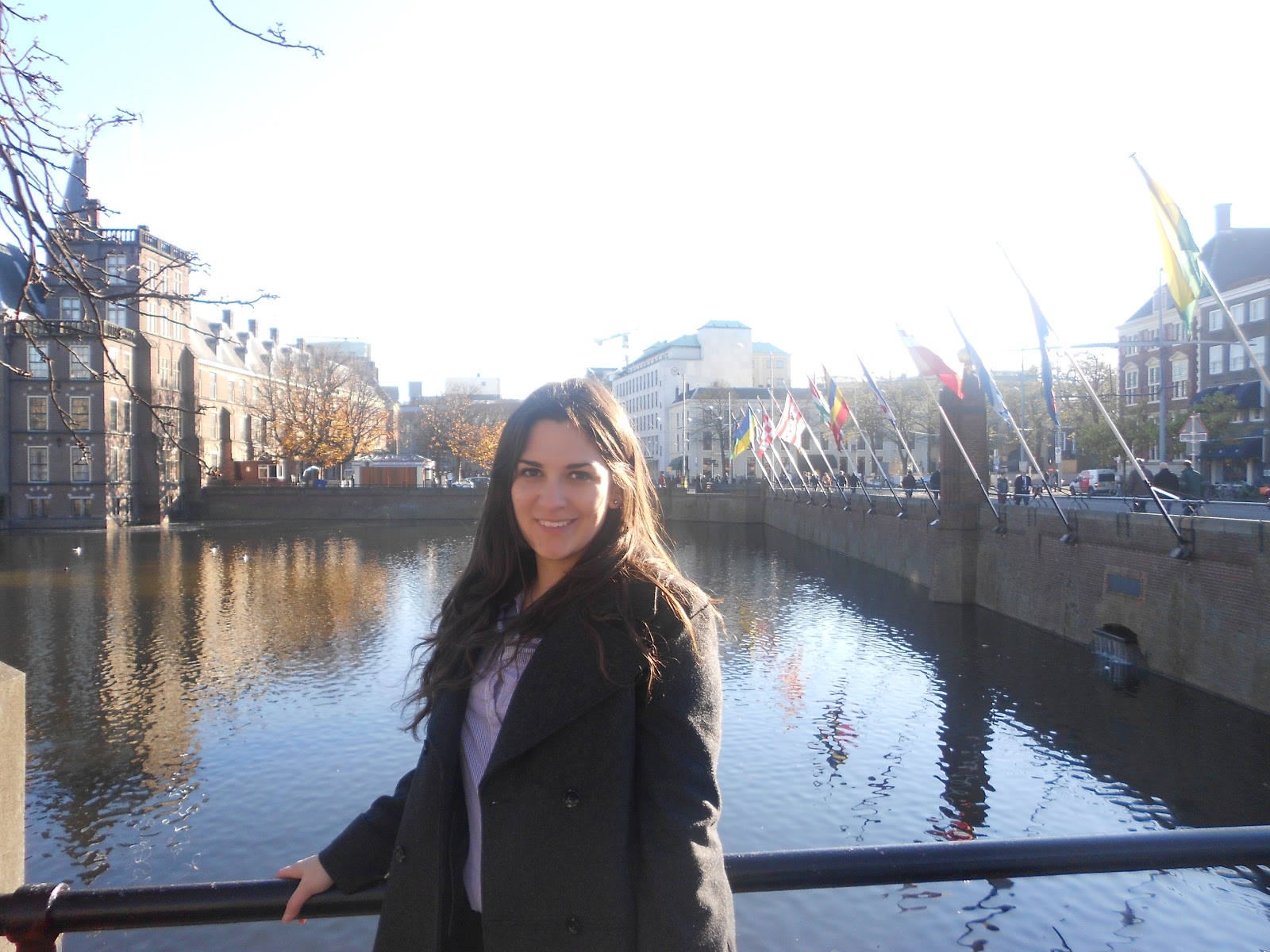
Alexdra Naslin is going to share her thoughts and reflections about another exciting day in the Grundtvig project. If you ask who is Alexdra Naslin; she was one of the participants we had a chance to meet through the Grundtvig project. Alexdra is half Russian and half  Moldavian, she is currently living in Poland. She has been working in government offices, NGOs, political parties and mass media focusing on the sphere of communication and project management.


 Today we had an intensive and fruitful day which opened up new horizons and provided us with new information, knowledge and tools for our future projects. In the first part of the day we had a meeting with Mr. Hans van Oel, the head of the Integration department at the municipality of The Hague. He presented us the situation and the current trends of the immigration in the city of The Hague which has a population of 50% coming from a migrant descent and the municipal policies on integration of foreigners. 

We had a chance to discuss with Mr. Hans van Oel, the problematic issues related to immigration, integration, citizenship, anti-discrimination policies and multiculturalism. Mr. van Oel also gave us an excursion in the municipality building. It is a remarkable building all white and has glass ceilings. As we were told the light during day keeps changing in the building, especially in rainy days you can see the rain coming down so beautifully if you just tilt your head up, towards to the ceiling. The transparent walls of the building is symbolizing the openness and transparency of the local government, and offers a big open space for meeting of citizens, for cultural events, exhibitions and press conferences. 

In the second part of the day we participated in the project cycle management training organized by UNPO (Unrepresented Nations and Peoples Organization) by Pierre Hegay, the program coordinator. We learned about the Logical Framework Approach in Project Management and stages of project management with the corresponding methods. Working in small groups we applied this project management framework and the tools to the proposed case of economic development in Africa. Through this case study we developed our knowledge and skills in problem analysis ("problem tree analysis") and identification of project strategy, stakeholder analysis and management of stakeholder's expectations and the objectives analysis ("objective tree analysis"). 

It was a day of learning and exploring, the first part of the day focused on the policy making, implementation, practical problems in The Hague and second part was on logical frameworks on how to tackle these social/ economical issues we face within the society. There is always a room to learn more.

Friday, December 21, 2012

Grundtvig, Lifelong Learning Programme - Change Yourself, Change The Experience


This year's Grundtvig workshop hosted 23 participants in November from all over Europe with diverse backgrounds.  7 days of training, workshops, discussion and study visits fostered dialogue between different cultures, provided necessary skills to tackle problems associated with minority communities in Europe and flourished new friendships. This time again, as GHRD we would like to give voice to those who were with us during the Grundtvig week because as every individual participated in the project, they made this experience very special for all of us.


Melissa Chen was one of the many interesting participants GHRD had during the Grundtvig week. Melissa is  originally from Costa Rica, she is currently living in Germany. She studied Economy and International Business Management in Costa Rica and Germany. She worked during almost 5 years for the pharmaceutical companies Schering and Bayer in both countries. Her interest for minority rights comes from her passion to travel and explore different cultures. She is also interested in social entrepreneurship. She likes dancing and learning languages.

It is the 4th day of our workshop at GHRD in The Hague.  INBOX Training and FORUM Theatre are in the agenda.  Every day has been so full of interesting presentations, lectures, workshops and visits to organizations.  But today was without doubt the most active and dynamic day of all. 


 Together with the Dutch organization Critical Mass, we started our program with an activity to deepen into stereotypes.  People are constantly labelled and labelling others in the society and the aim of this workshop was to reflect on this.  Through this activity we experienced the feeling of being categorized and labelled with different attributes as everyone received his and her own “new attribute”.  The interesting part was that we did not know what our own new label was.  Thus all of us had to deal with the reactions of other people with their own views and prejudices towards the “new us”.  By putting yourself into the shoes of others it is easier not only to identify but also reflect on the effects of prejudice and the importance to avoid it.

The afternoon program was at least as interesting as we participated together in forum theatre activities conducted by a Colombian performing artist.  I enjoyed the games and the short improvised plays especially because they were fun and we had the opportunity to interact with each other.  We had both one on one and group exchanges where we were able to share personal experiences and get to know each other better in a very interactive way.  By the end of the activities we were tired but very happy.  I am glad and thankful for this opportunity to learn and share with this amazing group of people with the most diverse backgrounds.

Thursday, November 8, 2012

How can we inspire and educate young people in human rights?


One answer to that we experienced during the Youth in Action training course “When social meet rights” in Montijo, Portugal, 15th-22nd of October 2012.

During a six day long training course we were educated in the different components of the European Social Charter through a special learning method, namely non-formal education. It was something totally new for us and at the beginning we were a bit sceptical since we are used to a more theoretical and formal education model. Although the outcome of these non-formal education sessions, regarding the knowledge about the social rights, were far more comprehensive than we thought. We felt more emotionally and personally connected to the issues we discussed since everyone was actively participating in the different exercises through different workshops and role plays. It was a new kind of a concrete and practical learning process rather than the theoretical one we are used to.

There were also a lot of teambuilding games and team work exercises which built up a sort of trust among us participants and had a great positive influence on the group dynamic.

We think this method of non-formal education could successively be used in a broader sense to engage and involve youth in the human rights area, since the method of non-formal education are easier to relate to when someone don’t have the theoretical knowledge. And even if you have the theoretical knowledge the non-formal education gives you a multi-dimensional approach to the subject and makes you reflect a lot during the learning process. We learned a lot about social rights and also had a lot of fun! J

Jana Lopusna and Isabel Duchén


The Quest for identity: What does it mean to be a Muslim?

In the last few weeks when you opened the newspaper or turned on the television, you could see Muslims on the streets protesting with anger and disappointment against the so called anti-Islamic film, “Innocence of Muslims”. In several countries all over the world protests occurred; some ended with violence some remained as peaceful demonstrations. At the center of this was the portrayal of Muslims as a raving crowd destroying everything on their way in the name of their religion. Nowadays it is difficult to see both sides of the coin when innocent people get killed and the respect for religious diversity crushed under the brutality of a singular identity. An identity that projected upon Muslim goes hand in hand with violence. This identity is creating a heavy burden to carry for Muslims who believe these violent acts are undeniably immoral and cannot be justified by religious beliefs or teachings. Nevertheless, Muslims are put on a trial as a scoundrel group containing single identity of fundamentalists. Can we trust a religious based analysis of people to understand the humanity behind 2,1 billion Muslims living in the world today?

In Pakistan, during the Day of Love for the Prophet demonstrations against “Innocence of Muslims” escalated into violent acts. Mardan, known as the city of hospitality, experienced a horrific incident on 21th of September. A group of Muslim men attacked a 80 years old church compound and burned it to the ground. Eye witnesses said the angry mob event tried to prevent fire fighters to enter the church compound. Another incident happened in Bangladesh, where Buddhist villages and temples were attacked by Muslims after a member of the Buddhist community placed an offensive post on Facebook about the Quran. In the end the scene was similar; the houses were torched, shops were vandalized, and temples were burnt down. International media emphasized the role of Muslims as being the destroyers of religious tolerance to the detriment of those with different beliefs.

According to Samuel P. Huntington the violence in contemporary global society ignites from a “clash of civilizations” connected to the antagonisms between collective identities. Among the collective identities, Muslim identity has become synonymous with words like terrorism, intolerance, inequality and violence. However any presumption based on this singular identity when attempting to understand the political opinions and social judgment of people who happen to be a Muslim cannot be accurate. This singular identity has a commanding voice therefore it does not leave any room for plural identities, who display different social behaviors and have different values, to exist. Using religion to justify violent acts should be condemned but also being a Muslim should not come with a baggage when people believe and say: “Yeah, that’s how the Muslims are”.

Photo by: The Express Tribune

Monday, September 17, 2012

Dealing with human trafficking in Nepal: Awareness and Education

“Education is the most powerful weapon which you can use to change the world.” Nelson Mandela

Human trafficking as a form of modern day slavery is a complex problem of many countries all around the world, whether developing or developed ones. The phenomenon is usually caused by a combination of factors. Especially, when looking at the countries of South-Eastern Asia, such as Nepal, one can observe communities struggling with poverty, illiteracy, absence of any awareness about human trafficking, various forms of discrimination and consequent social exclusion.  Furthermore defective governmental policies to prevent and punish human trafficking as well as insufficient victim protection coupled with gaps in effective law enforcement and corruption omnipresent at all level of public administration make combat against human trafficking and modern slavery to seem a mission impossible.


One the one hand, the state is bound by a number of international and regional instruments imposing measures to be taken and regulating cooperation in order to tackle human trafficking. In that way, the government shall adopt policies and develop strategies to comply with its international obligations. On the other hand, the executive is struggling to carry out its own commitments. Deficiencies in pursuance of anti-trafficking programs lack unified approach and are often caused by shabby and chaotic coordination among actors involved. Competency between programs of public bodies and NGOs and among various NGO initiatives does more harm than good. Even a well-drafted action plan remains a long shot when it is spoilt by corrupted civil servants and policemen who are themselves involved in the trade with human beings. In the end shortage of financial means in one of the poorest countries in the world ‘lends its helping hand’ to the problem.

However, even if the legal framework was excellent and governmental efforts were well-managed, any such action would work without corresponding grassroots initiatives. Human trafficking is featured by a hidden nature. Similarly, dynamics of current flows of migration, which goes through unregulated channels together with, lack of reliable research data on human trafficking folds the problem in the mist. Above all, many victims place themselves into the hands of traffickers voluntarily. Fooled by promises of greener pastures, lured by false perspectives of employment abroad and a better life, poor people submit themselves to traffickers absent any knowledge about real purposes and practices of the traffickers. More and more often, families pressed by economic uneasiness sell their own children persuaded that such step would provide them with means to nourish the rest of the family. At the same time they posses no knowledge about real forthcoming fate of their sons and daughters.

After that, instead of promising employment opportunity, Nepali children end up as sex workers in Indian brothels or servants in wealthy residences in Middle East. Physically and mentally exploited, tortured and stigmatized, they are not only rejected a normal childhood, but also their future perspectives are gone with the wind.

Because of all that, it is crucial to adopt a grassroots approach to both prevention of human trafficking and rehabilitation of victims. NGO and governmental initiatives, action plans and programs shall be aimed at raising awareness, counselling and providing information among endangered communities predominantly in remote areas without sufficient media coverage and high rate of illiteracy. Education, training and awareness-raising play a key role in preventing a heinous crime of human trafficking and slavery. Civil society shall actively participate by providing support for educational activities, qualification and skills-gaining with the view to enable persons´ access to secure labour market. In that regard, it is important to ensure that employment services are provided on equal basis. Similarly, rural development, support for local business is a must once we want to put malignant phenomenon of modern slavery to the end. Of a cardinal importance is also promotion of non-discrimination, equality, solidarity and social inclusion of all communities within Nepal.

In the very end, only coherent and joint action at all levels of the society, underlined by mutual understanding, respect, and solidarity and will to search for a meaningful solution can bring Nepal and other countries out of the vicious spiral of slavery.

Jana Lopusna, LL.M.

Film Night - What Does it Mean To Be a Refugee?

Róża Kowalczyk had many questions in her mind after the documentary night during Youth and Action week; she agreed to put them on paper and share it with rest of us. Let us tell you a bit more about her. Róża is from Poland studying International Relations in Asia and Pacific Ocean Region. She was the coordinator of International Research Fundation UMCS project last year on Migration in Europe. In her free time Róża likes to cook, read, paraglide and learn Chinese. Read her ideas about what it means to be a refugee:

Tuesday 21th of August 2012

Who are refugees? What have forced them to leave their fatherlands? And finally – who needs them? Answers to all those questions we could have find watching a documentary during Youth in Action week; an upcoming documentary which is focusing on the issues of refugees in The Netherlands.

Whole film is divides into three main parties. Each of them shows different part of refugees’ life. Each of main characters tells their own history. Sometimes documentary films focus more on a general problem, what makes them less realistic and convincing. This time we could be as close to people’s problems as it is possible. It is not a story about refugees as a group or a potential threat to the society as some believe, it is a film about people who had to leave their usual lives to… live.

A new life, however safe, is very different from the dreams. Can you imagine starting all over again? Education, employment history, friendships… Can you imagine world when suddenly, day by day- you mean nothing. You’re no one, and no one likes you, or even understands; nor helps, nor has a usual conversation. You had to runaway and try to save your life just to become an outsider. You do your best to star over your life: learn language, graduate (one more time!), look for job but you might always stay as an alien.

So maybe sometimes we should check what's happening on the ‘other side'; open our minds and do some research. There might no mainstream media existing that will tell you all the truth about what it is like to live under a dictatorship, but maybe you can find out the truth from your neighbour who escaped from it and ended up living in your country as a refugee. And there is no book which can teach you a country's culture, the mentality as a foreign friend can. Finally, there is no one who can call himself human if he/she forbids others to live happily. That's all this film reminds us.